

Light Mode
Dark Mode
XIV YEARS
XIV • 14 Years That Changed Brand Visibility

Textile & Retail Advertising in India: A 2026 Strategy Guide

Textile and retail advertising strategy guide for Indian brands

India’s textile and retail sector sits at a genuine crossroads. Centuries of craftsmanship now share space with a fast-moving digital marketplace, and brands in this category face a specific set of challenges balancing heritage with innovation, managing both B2B and B2C buyers, and competing across domestic and export markets at the same time. For textile manufacturers, fabric exporters, home furnishing brands, and fashion retailers, strategic advertising is often what separates market leadership from being overlooked entirely.

This guide covers what effective textile and retail advertising actually requires in 2026  the services involved, the strategic approach that works, and how to measure whether it’s succeeding.

Why Textile & Retail Advertising Needs a Specialized Approach

Textile and retail advertising differs from other categories in one key way: a single brand often serves several very different audiences at once. A fabric manufacturer might need to speak to wholesale buyers, retail partners, interior designers, architects, and end consumers  each requiring distinct messaging and channels.

India’s textile sector adds further complexity. It spans heritage handlooms, sustainable organic fabrics, high-volume manufacturing, and luxury couture textiles, and each category demands different marketing knowledge:

  • Mass-market retail needs aggressive performance marketing and strong omnichannel presence
  • Premium decor brands need sophisticated PR, editorial features, and influencer partnerships
  • B2B textile exporters benefit most from trade show marketing, buyer relationship management, and industry-specific content

Generic advertising approaches tend to underperform in this category because they don’t account for these distinct buyer types.
textile manufacturing process in India for retail brands

What Textile & Retail Advertising Should Include

☐ Strategic brand positioning and identity — a visual and messaging system that instantly communicates quality, category, and values

☐ Digital marketing and e-commerce growth — SEO, paid search, social content, email marketing, and conversion optimization

☐ PR and editorial visibility — coverage in design magazines, trade publications, and lifestyle media

☐ Trade show and exhibition marketing — for B2B brands, this includes pre-event buyer outreach and post-event follow-up

☐ Content production — product photography, lifestyle imagery, video, and seasonal lookbooks that sell both the fabric and the lifestyle around it

Strategic Brand Positioning & Identity

Before launching any campaign, textile and retail brands need clear positioning that separates them from competitors. This requires market research, audience analysis, and a defined value proposition. A professional brand identity: logo, color palette, typography, and design guidelines should communicate that positioning instantly, whether the goal is sophisticated minimalism for premium furnishings or a contemporary take on heritage craftsmanship.

Explore our brand positioning and identity services.


Digital Marketing & E-Commerce Growth

Digital presence is non-negotiable in this category. Core components include:

  • SEO targeting product-specific and category keywords
  • Paid search and social advertising for immediate visibility
  • Social content showcasing products in aspirational, real-world contexts
  • Email marketing for retention and repeat purchase
  • Conversion-rate optimization on product and category pages

For B2B textile brands, LinkedIn tends to establish thought leadership most effectively. For retail-facing brands, Instagram and Pinterest typically drive stronger product discovery through visual storytelling.

Digital Marketing


PR, Editorial Visibility & Industry Credibility

Strategic PR moves a brand beyond a single transaction. Features in design magazines and trade publications build a form of credibility that paid advertising alone cannot replicate. For luxury textile and furnishing brands specifically, editorial coverage in recognized design publications signals quality to buyers who are already primed to notice it.

PR activity in this category typically includes product launches, trade show announcements, sustainability initiatives, and executive thought leadership positioning founders or leadership as informed voices in the industry.

Learn about our PR and media outreach services


Trade Show & Exhibition Marketing (B2B)

For B2B textile brands, trade shows remain one of the highest-value opportunities available. Effective execution includes:

☐ Pre-event outreach to target buyers

☐ Strategic media engagement around the event

☐ Compelling, on-brand booth design

☐ Systematic post-event follow-up to convert leads into orders

How to Build a Textile & Retail Advertising Strategy

  • Start with clear objectives — are you building awareness for a new fabric collection, driving e-commerce sales, or attracting international buyers? Your goal shapes every channel and creative decision that follows.
  • Invest in professional visual content — in this category, product presentation directly affects perceived quality; high-quality visuals also perform better in social algorithms and improve e-commerce conversion.
  • Balance brand building with performance marketing — the strongest textile brands combine PR and content marketing for awareness with performance tactics for immediate conversion, rather than relying on one alone.
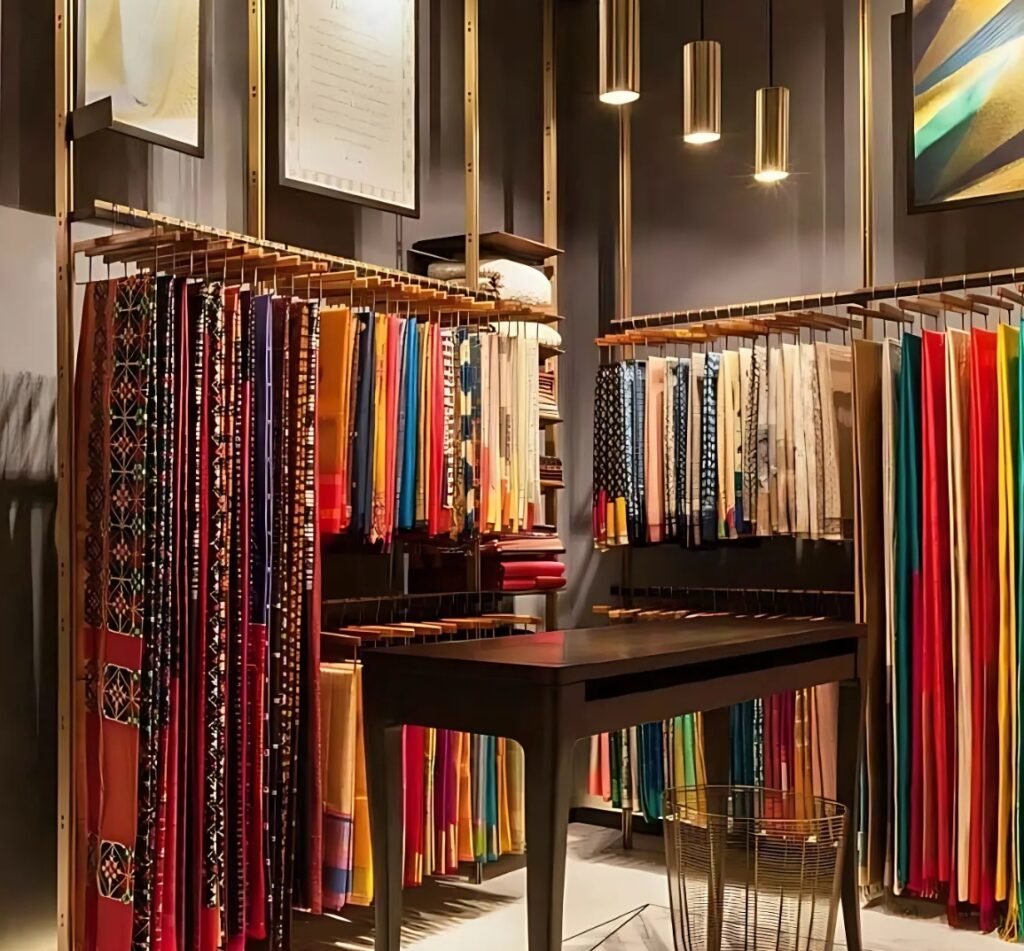
Textile brand trade show booth design example

Measuring Results in Textile & Retail Advertising

Track metrics aligned to your specific business model:

  • B2B manufacturers: buyer inquiries, sample requests, export orders
  • Retail brands: website traffic, conversion rate, customer lifetime value
  • Industry-specific indicators: trade show booth traffic, media coverage in design publications, social engagement on product content

Attribution modeling helps clarify which touchpoints actually influence a purchase decision  B2B sales usually involve a longer consideration cycle with multiple decision-makers, while retail purchases might move from Instagram discovery straight through to e-commerce checkout. Monitoring brand health indicators (awareness, preference versus competitors, pricing power) over time helps confirm that advertising is building a durable advantage, not just short-term traffic.


Common Textile Advertising Mistakes to Avoid

  • Generic marketing that could apply to any category — effective textile advertising shows fabric hand-feel through video and communicates weave complexity to trade buyers specifically
  • Inconsistent visual presentation — inconsistent photography style undermines quality perception faster than almost any other factor in this category
  • Neglecting B2B marketing while focused on consumer awareness — both audiences require dedicated strategy, not an afterthought
  • Underinvesting in educational content — buyers often need context on sustainable manufacturing, fabric applications, or styling before they convert


Choosing the Right Textile & Retail Advertising Partner

Look for an agency that offers integrated services (brand strategy, PR, digital, content, and creative) under one roof, since this reduces vendor-coordination friction and keeps messaging consistent. Cross-border experience matters if you’re serving international markets  an agency with global exposure will understand positioning differences between, for example, Middle Eastern luxury buyers and European sustainability-focused consumers, while keeping your core brand identity consistent.

Explore Trivium’s brand advertising services for textile and retail brands.

brand advertising

FAQ

What makes textile advertising different from other retail advertising?

Textile and retail brands often serve multiple distinct buyer types at once  wholesale, B2B, and end consumers  each requiring different messaging, channels, and creative approaches within the same overall brand.

How much should a textile brand invest in advertising?

This varies significantly by business model and goals. B2B exporters often invest more heavily in trade show and relationship marketing, while D2C retail brands typically allocate more toward digital and performance marketing. A clear objective should guide budget allocation rather than a fixed industry benchmark.

Is PR worth it for a textile or home furnishing brand?

Yes, particularly for premium and heritage brands. Editorial coverage builds a form of third-party credibility that paid advertising cannot replicate, and it often has a longer-lasting effect on brand perception.

What social platforms work best for textile and retail brands?

LinkedIn tends to work best for B2B textile exporters and manufacturers. Instagram and Pinterest generally perform better for retail-facing and home furnishing brands, since both platforms favor visual product discovery.

A complete guide to advertising for textile and retail brands in India covering positioning, digital marketing, PR, trade shows, and how to measure results.

Trivium Universal

Trivium Universal

We use this space to share perspectives from real campaigns, brand strategies, and communication projects across industries. The focus is on how brands grow, how visibility is built, and what works in today’s evolving media landscape.

You’ll find campaign breakdowns, marketing strategies, media insights, and brand thinking shaped by real-world execution—grounded in experience, not trends.

Share:

Related Posts

Sanket Kakad
Sanket Kakad

ENQUIRE NOW