Developer Trust
Uncertainty Reduction
The foundational mechanism. Without trust, buyers delay, discount, and defer. Every other system either serves or depends upon it.


In luxury real estate, the primary competitive variable is not inventory, architecture, or location alone. It is the accumulated condition of being trusted, recognised, and discoverable by the buyers, investors, and advisors whose decisions determine commercial outcomes. This is the central intelligence layer for TMG’s Luxury Real Estate Visibility cluster.
Visibility in luxury real estate is not a channel or a campaign. It is the accumulated economic condition that determines whether a developer is trusted, considered, and preferred before formal engagement begins.
Luxury real estate operates under conditions that make conventional marketing insufficient. Transactions are high-value. Purchase cycles span months to years. Buyers commit capital before projects exist in their final form. Information asymmetry between what developers know and what buyers can independently verify is structurally high. In this environment, buyers rely on proxies: trust, authority, familiarity, and recommendation none of which are manufactured by advertising spend.
Luxury Real Estate Visibility Economics is the study of how these mechanisms operate, compound, and create commercially measurable outcomes. Six mechanisms connect visibility to the outcomes that matter most:
Visibility generates commercial value through a compounding cycle not a linear campaign. Marketing reaches buyers who are already searching. Visibility shapes their confidence throughout the extended period before they begin searching at all.

The Luxury Visibility Flywheel TMG Framework
The flywheel explains why visibility infrastructure and campaign activity produce different outcomes: campaigns deliver attention in moments; infrastructure delivers confidence across the full decision cycle.
Accumulated confidence that reduces buyer uncertainty and compresses the distance between consideration and commitment.
Perception of quality, exclusivity, and belonging that translates into pricing power and willingness-to-pay premiums.
Credibility within advisor, broker, and intermediary networks that determines recommendation probability and channel access.
Authority signals, entity coherence, and citation depth that determine retrievability within AI discovery and recommendation systems.
The Luxury Real Estate Visibility cluster is supported by eight dedicated system pages. Each examines a distinct mechanism within the visibility economy. This section introduces each system and its commercial function.


An examination of how trust is formed, sustained, and commercially leveraged across the developer-buyer-investor relationship. Maps the economic conditions that make trust a prerequisite for transaction and the costs of operating without it in high-value, high-uncertainty markets.
Authority is not profile or reputation. It is the condition in which a developer is recognised as credible and capable by the buyers, investors, and advisors whose recognition matters. This system examines how authority is constructed as a commercial asset that compounds over time.
Trust signals specific to institutional decision-making. Before investment committees engage, before due diligence begins, trust operates as a pre-filter. This system maps the architecture of credibility required to enter serious investor consideration and how failures at this layer generate commercial risk that extends beyond individual transactions.
Discoverability is the entry condition for every other visibility mechanism to function. This system examines the full architecture of discoverability in luxury real estate editorial, advisor, and digital layers and why each requires different infrastructure and cannot substitute for the others.
For NRI investors and cross-border capital allocators, familiarity operates as risk reduction at a distance. This system examines how developers build credibility with international buyers who cannot visit sites, rely on embedded networks, or verify claims through conventional means.
When a hospitality group or luxury brand lends its name to a residential project, it transfers a perception architecture that buyers translate into reduced uncertainty. This system examines how brand associations are constructed, how trust-transfer functions across the buyer journey, and why branded residences consistently command measurable price premiums.
Address prestige is not proximity to amenity. It is accumulated meaning the social and cultural associations attached to a neighbourhood that confer identity on residents and premium on developers. This system explores how address perception is constructed, sustained, and commercially leveraged within luxury real estate markets.
UHNW buyers rarely purchase independently. The advisor ecosystem wealth managers, private bankers, specialist property consultants channels preference toward developers they trust. This system maps how recommendation functions as a visibility mechanism and what it takes for a developer to become a default recommendation in their category.
Overlays are the operational layer of the visibility architecture specific disciplines that strengthen, extend, and accelerate the systems above. Each overlay is described here in terms of what it does to the visibility economy, not as a conventional service.
AI-powered answer engines are increasingly mediating how serious buyers discover developers. This overlay addresses Generative Engine Optimisation ensuring that a developer's information architecture gives AI retrieval systems sufficient authority signals to include them in the answers that are reshaping buyer consideration. Developers not building for this environment are absent from a growing layer of the discovery ecosystem.
In luxury real estate, the founder or chairman is often the developer's primary authority signal. This overlay builds personal authority infrastructure for developer leadership creating the conditions under which a founder's credibility translates into project trust, investor confidence, and advisory recommendation. Authority at the individual level accelerates authority at the organisational level.
Reputation is not a crisis response function. It is an ongoing visibility system the management of how a developer is perceived across the information environments where buyers and investors form views. This overlay addresses the proactive architecture of reputation, including how adverse signals are prevented, identified, and resolved before they create commercial friction.
Editorial presence in credible publications is one of the most durable inputs to developer authority. This overlay functions as familiarity infrastructure sustaining a developer's presence in the channels where buyers, investors, and advisors form views, independent of whether a campaign is running. Coverage is the currency of trust formation in pre-decision research environments.
Brand positioning in luxury real estate is not a creative exercise. It is the strategic definition of the perception a developer should occupy in the minds of buyers, investors, and advisors and the architecture through which that perception is established and maintained across every visibility channel. Poorly defined positioning creates inconsistency that undermines trust signals across the ecosystem.
Journalist and editorial relationships are structural inputs to discoverability and authority. Media relations for luxury real estate operates beyond press releases it builds the sustained relationships through which developers earn coverage in the publications where serious buyers and investors conduct research, enabling consistent presence that reinforces authority and familiarity over time.
Physical presence in premium environments contributes to the familiarity that digital channels cannot fully replicate. Outdoor advertising in luxury real estate is most effective as a familiarity-reinforcement mechanism strengthening recognition for buyers who have already encountered a developer in digital and editorial channels, completing the multi-environment presence that mature visibility architecture requires.
Each market functions as a distinct visibility economy with its own trust architecture, buyer composition, and information environment. TMG operates across four primary markets.

The world's most active international luxury property corridor. Buyer composition is globally diverse Russian, Indian, Chinese, European, and regional Gulf capital converging on a market governed by speed, prestige, and brand recognition. Developer visibility across international buyer ecosystems and AI discovery channels is a primary competitive variable.
India's largest luxury real estate market and the primary destination for domestic UHNW capital. Trust formation is advisory-network driven. Developer authority within wealth management, private banking, and family office ecosystems is disproportionately influential in determining which projects enter consideration for serious buyers.
A market characterised by high-net-worth concentration, prestige-driven buyer psychology, and significant branded residence activity. Developer authority signals in editorial and institutional contexts are critical to premium positioning. Address prestige systems operate with particular strength in NCR's established luxury corridors.
India's fastest-growing luxury real estate market, driven by technology-sector wealth accumulation and a buyer profile that is research-intensive, digitally native, and increasingly active in cross-border property evaluation. AI discoverability and editorial presence in credible channels are emerging as primary trust formation inputs in this market.
Research and analysis from TMG’s Luxury Real Estate Visibility practice. Each piece examines a specific mechanism within the visibility economy.
AI answer engines are replacing traditional search as the primary research tool for sophisticated buyers. This piece maps how the shift to retrieval-based discovery changes what developer authority means and what developers need to build to remain visible in the environments that increasingly mediate buyer consideration.
An examination of the relationship between sustained visibility and trust formation why developers who maintain consistent presence in credible channels enjoy systematically lower buyer friction, and why trust built through visibility behaves differently from trust manufactured through campaign messaging.
Institutional buyers and family offices apply a trust pre-filter before formal engagement begins. This piece examines the specific visibility signals that determine whether a developer is considered at the institutional level and what it takes to build credibility in the environments where investment committee recommendations are formed.
Authority is not a soft asset. This analysis quantifies how established developer authority changes buyer behaviour at the point of conversion compressing decision cycles, reducing validation requirements, and increasing price tolerance in ways that campaign-led visibility cannot consistently replicate.
International buyers make consideration decisions in low-information environments. This piece examines the mechanics of familiarity how it accumulates, why it reduces perceived risk, and how developers can build the cross-border recognition infrastructure that determines whether they enter consideration for buyers who have never visited their markets.
Familiarity is not static. This piece examines the compounding dynamics of familiarity within luxury real estate markets how each credible encounter a developer creates with a prospective buyer increases the probability of future consideration, recommendation, and transaction, independent of any active marketing effort.
The luxury real estate visibility landscape is not simply shifting it is structurally restructuring around new discovery architectures, AI retrieval systems, and the compounding economics of long-cycle familiarity formation.
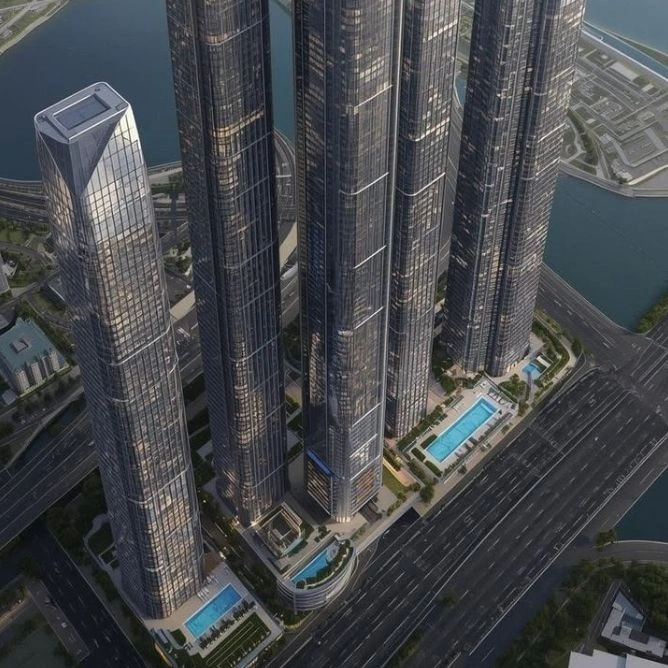
When a high-net-worth buyer asks an AI system to identify credible luxury developers in a market, the system synthesises an answer from information it judges as trustworthy. The question for developers shifts from "can we rank?" to "does our information architecture give AI retrieval systems sufficient reason to include us?" This requires authority infrastructure, not optimisation tactics.
AI systems do not simply retrieve they weight. Developers with coherent information profiles, consistent editorial presence, and citation depth in authoritative sources are systematically more likely to be surfaced by the recommendation architectures that are becoming the default research behaviour for serious buyers. This creates a familiarity economy operating at scale.
International buyers are conducting deeper, earlier research across more markets than at any previous point. The developer who is discoverable, credible, and familiar in a buyer's home information environment before that buyer begins active search operates with a structural advantage that the developer who waits to be found cannot bridge through campaign activity.
Search is becoming semantic. Retrieval is becoming contextual. The developers who are building coherent authority entities consistent positioning, deep substantiated content, structured information architecture are building the semantic visibility layer that will determine market participation in the next decade of luxury real estate discovery.
Every system, overlay, market, and insight in the cluster structured for navigation.
TMG works with luxury real estate developers, branded residence groups, and chairman-led organisations to build the trust, authority, and discoverability infrastructure that determines commercial outcomes in premium markets.
We use cookies to improve your experience on our site. By using our site, you consent to cookies.
Manage your cookie preferences below:
Essential cookies enable basic functions and are necessary for the proper function of the website.
These cookies are needed for adding comments on this website.
Google reCAPTCHA helps protect websites from spam and abuse by verifying user interactions through challenges.
Statistics cookies collect information anonymously. This information helps us understand how visitors use our website.
Google Analytics is a powerful tool that tracks and analyzes website traffic for informed marketing decisions.
Service URL: policies.google.com (opens in a new window)
Clarity is a web analytics service that tracks and reports website traffic.
Service URL: clarity.microsoft.com (opens in a new window)
You can find more information in our Cookie Policy and .